Optimizing Fastening Speed for Precise Torque Control

Optimizing Fastening Speed for Precise Torque Control

Optimizing Fastening Speed for Precise Torque Control
In industrial fastening, speed is often mistaken as a straightforward way to increase productivity. This assumption, often simplified further as in "doubling the speed will double the output", is misleading, as it disregards the complexities of torque control, joint characteristics, and material properties. While faster speeds can reduce cycle times, they also introduce risks such as thread stripping, cross-threading, and inconsistent torque application. Therefore, proper speed management is essential to strike the right balance between efficiency and precision, ensuring high-quality assemblies while avoiding costly rework and defects.
At V Tech SMT, we sometimes encounter situations where manufacturers struggle due to sub-optimal programming of their torque tools, with improper speed settings often being a key issue.
Recently, an electronic component manufacturer was fastening plastic housings at too high of speed, overheating the plastic and altering the failure torque point of the joint, leading to quality and reliability issues. By guiding the client through some simple adjustments in their tightening settings, we were able to quickly solve the problem and greatly increase the quality and reliability of the final product. This case underscores the importance of matching speed settings to the material being fastened.

The Role of Speed in Screwdriving
Tightening speed directly affects how torque is applied to a joint. If the speed is too high, it can lead to problems like thread stripping (especially in softer materials like aluminum or plastic), cross-threading (i.e., misalignment between the screw and the thread) and lower closing torque repeatability. Conversely, if the speed is too low, it can lead to inefficient cycle times, slower production, and sometimes even increased wear on both the tool and the fastener.
For instance, too low of speeds when dealing with self-tapping screws or with elastic joints can overheat the screwdriver’s motor, much like trying to stretch an elastic band at the gym too slowly. Just as your arm muscles must constantly resist the tension of the band without gaining momentum, the motor must work harder to maintain torque.
Speed and Ergonomics: Protecting the Operator
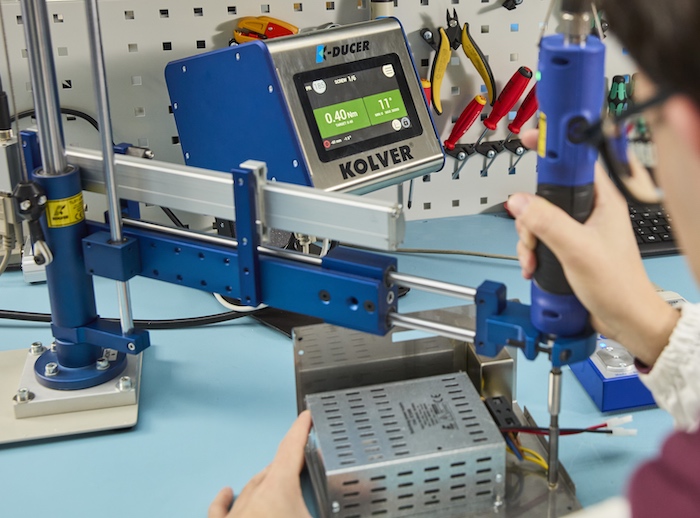
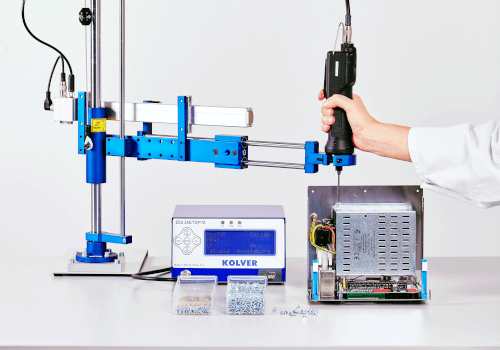
Speed not only impacts productivity and quality but also plays a crucial role in ergonomics and operator safety. The way reaction forces are absorbed during the tightening process can significantly affect fatigue and strain on the worker. On hard joints, high-speed tools rely on their inertia to absorb most of the reaction torque, reducing the strain felt by the operator. In contrast, working at lower speeds can make the tightening process feel smoother and improve accuracy, but it can also result in a stronger, more abrupt reaction force that increases stress on the hand, wrist, and shoulder with potential long-term conditions like carpal tunnel syndrome. In order to lower these risks of repetitive strain injuries, besides finding the optimal tool parameters for the joint, we recommend utilizing a torque reaction arm. Kolver offers many options when it comes to reaction arms.
Balancing speed, ergonomics, and tool control is key to creating a safer and more efficient working environment.
Adjusting Speed for Different Joints and Material
As mentioned earlier, we can find a multitude of materials and joint types in the industrial world and there is no one-size-fits-all when it comes to screw driving speed. Each material and joint type demands specific speed considerations to balance efficiency and precision. Soft materials (plastics, composites, certain types of wood) need lower speeds to help prevent excessive heat buildup and/or thread damage. We generally advise speeds around 300-500 RPMs.
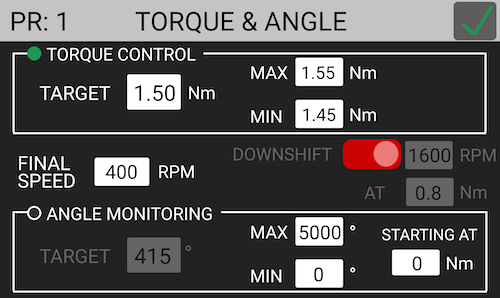
In the aforementioned situation where the client was tightening through plastic too quickly, we found that a speed of 400 RPMs was appropriate to prevent the quality issues that had been occurring.
Self-drilling screws can also benefit from lower speeds to avoid stripping, but also need enough speed to cut the threads, so a medium speed is advised. In these cases speeds in the 600-1000 RPMs are recommended, depending on the specific application and material.
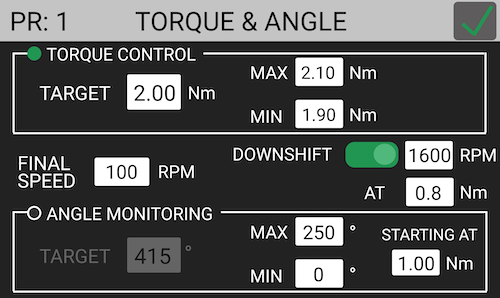
When working with metals, we recommend leveraging the downshift function available in Kolver’s current-controlled and transducerized screwdrivers to work at high speeds during the rundown phase of tightening (as high as the screwdriver’s max speed) while shifting to a lower speed after the screw has been seated, reducing the risk of over-tightening and increasing overall torque accuracy. We recommend a final speed of between 30 and 100 RPMs depending on the type of screw and the specified installation torque.
For special fasteners, such as ones used in many aerospace applications, the manufacturer will usually provide the appropriate fastening speed along with the installation torque specifications.
V Tech SMT are here to help
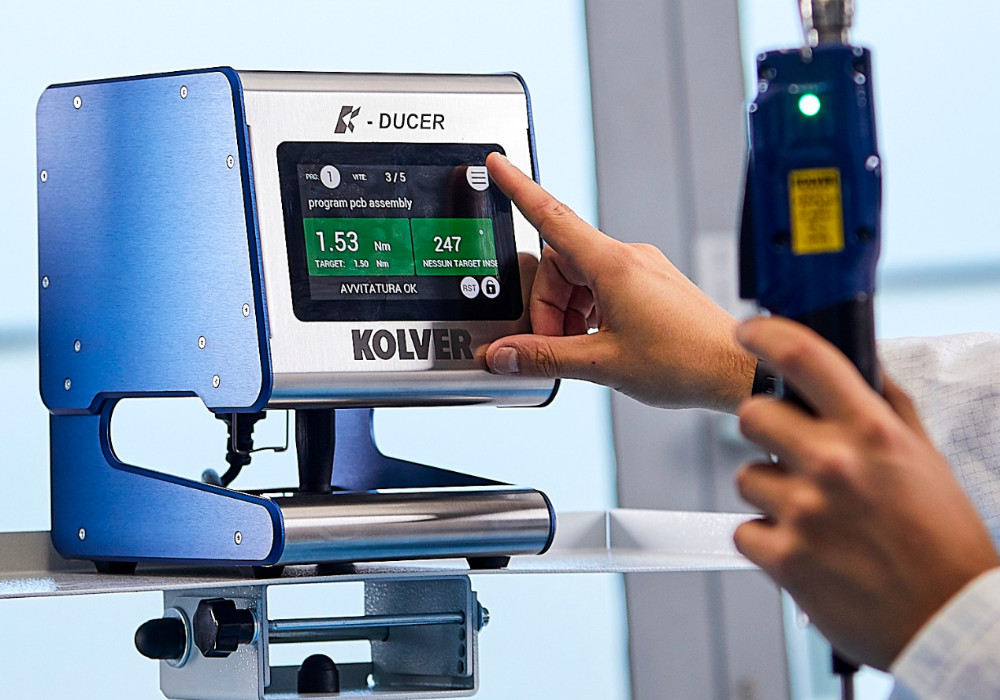
Speed management in screw driving is not just about faster assembly; it’s about precision and reliability. By adjusting speed settings based on the material and joint type, manufacturers can ensure proper torque application, prevent common issues, and achieve higher quality in their assemblies. Additionally, considering ergonomics when setting speed parameters can help reduce operator fatigue and injuries, and improve workplace safety. Investing in torque-control tools with advanced tightening strategies, like Kolver’s K-DUCER, can make a significant difference in both efficiency and long-term product performance.
For more information or to place an order, contact us at V Tech SMT.

Who is Kolver?
Kolver is one of the biggest names in the European market for electric screwdrivers. Every year, Kolver produces innovative, high-quality electric screwdrivers that are distributed around the world to businesses that operate across all industries.
What makes Kolver’s torque drivers better?
Known for their extreme precision, reliability and safety, Kolver’s drivers have become a mainstay of the modern manufacturing industry. Regardless of the industry, the qualities that Kolver drivers possess make them desirable for any manufacturing operation.
As an established and accredited company, Kolver also provides an assurance and guarantee that all products have been manufactured to the highest industry standards.
A focus on sustainability
With low energy consumption, Kolver’s drivers also present a sustainable option for businesses that are actively trying to lower their carbon footprints. In these modern times, Corporate Social Responsibility has become more important than ever. By opting to use equipment that is more environmentally friendly, organisations can massively reduce emissions and show their dedication to helping the environment.
Choosing the right electric driver
Having the right equipment and tools is, of course, an essential part of successful manufacturing. Whether you’re a DIY enthusiast or a large organisation, you want to get the best possible results and make sure you’re getting the most out of the time and money you have invested in your project.
With years of experience stocking a wide range of electric screwdrivers, we have built up an excellent knowledge base of which tools work best for specific projects. We’re happy to talk you through our range of electric screwdrivers to make sure you get the best possible tools for your task at hand. Contact us today to speak with a member of our friendly team.

Related Posts

Search
Categories
Recent blog posts