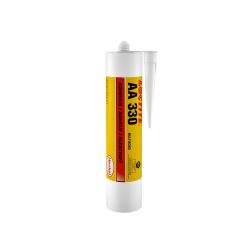
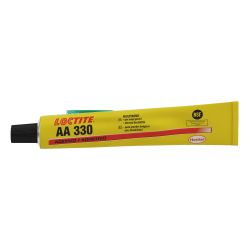
Why use a Henkel Adhesive for Structural Bonding?
The Henkel range of Structural Bonding products offers a wide choice of solutions to meet the different requirements and conditions that apply to industrial design and construction.
Bonding:
Adhesive bonding is a process in which two similar or dissimilar materials are permanently.
Adhesives build ”bridges“ between the surfaces of substrates to be joined.
To achieve the optimal bonding result, the following prerequisites must be met:
• Compatibility of the adhesive with the materials to be bonded
• Compatibility of the adhesive with the specified requirements
• Correct application of the adhesive
Advantages of adhesive bonding compared to conventional joining methods:
More uniform stress distribution over the entire bond face:
This has a very positive effect on the static and dynamic strength achieved. Where welding and riveting result in localised stress peaks, adhesive bonding achieves uniform distribution and absorption of stress loads.
No change in surface and texture of the joined materials:
Welding temperatures may change the texture and therefore the mechanical properties of
materials. In addition, welding, riveting and bolting all affect the visual appearance of the parts.
Weight saving:
Adhesives are particularly popular for light-weight constructions, where thin-walled parts (wall thickness < 0.5 mm) must be joined.
Sealed joints:
Adhesives also act as sealants, preventing loss of pressure or liquids, blocking the penetration of condensation water and protecting against corrosion.
Joining dissimilar materials and reducing the risk of corrosion:
The adhesive forms an insulating film to prevent contact corrosion when different types of metals are joined. It also acts as electrical and thermal insulator.